
Betrayal & Desire · 18+ · 800 WORDS
The Anniversary Photograph
A reflected stranger turns one couple’s anniversary portrait into a reckoning over authorship, buried choices, and the difference between love and ownership.
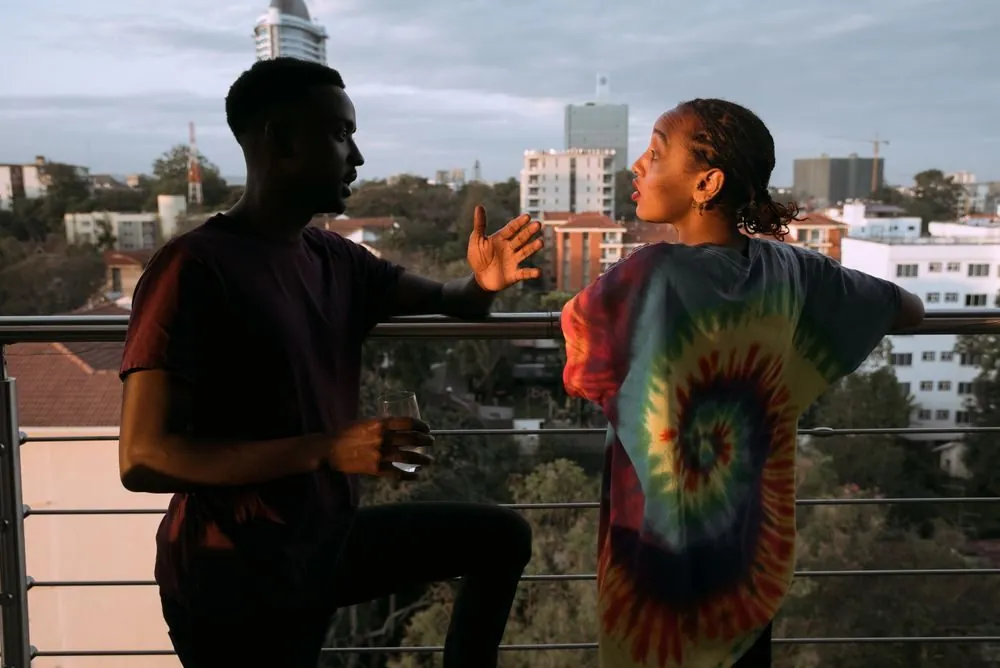
On their anniversary, Mara Venn, a forty-two-year-old photographer, discovers that the portrait she and her husband Elias keep contains a stranger in its reflection. Elias, forty-five, insists the woman is a lighting flaw. Mara enlarges the negative anyway, and recognizes the silver bracelet worn by Celia Rook, her business partner, who vanished from their lives eight years earlier. The image was taken the night Mara and Elias announced their marriage. Its reflected witness turns a celebration into a question, and the film begins not with a crime but with the intimacy of someone refusing an explanation. Nobody explains the image.
Mara’s investigation is also a study in authorship. She has spent decades restoring damaged photographs, deciding which scratches can be repaired and which belong to the record. At home, Elias has quietly curated their shared history: albums arranged by holidays, captions in his handwriting, difficult years reduced to tasteful gaps. He is an architect, not a cartoon villain, and his kindness makes suspicion harder to sustain. When Mara asks why Celia appears in the portrait, he says the past has no useful answer. The sentence sounds almost protective, yet it repeats the very boundary he never asked Mara to accept.
Celia’s absence first seems like an old affair concealed beneath respectable domesticity. Then Mara finds invoices showing that Celia co-founded their restoration studio and disappeared after accusing Elias of diverting its archive. The betrayal is financial as much as romantic: he used their marriage, and Mara’s trust, to secure control of work that belonged to both women. But the film withholds certainty. Celia may have left; Mara signed documents without reading them. Desire here is not a license to excuse deception. It is the pressure that makes tenderness feel newly negotiable, and fact a question of agency, of shared ownership.
Following the photograph’s reflected details, Mara traces a route through the studio, a hotel lobby, and a pavilion where the anniversary party ended. Each location produces evidence, but also competing memories. A retired printer recalls Celia asking Mara to leave with her. Elias remembers a quarrel and says Mara chose to stay. Mara remembers neither scene clearly, only the shock of being expected to decide while everyone else had already named her choice. The mystery thus turns on a subtle thriller premise: people can be betrayed not only by lies, but by others narrating their consent before they have spoken.
Elias does not threaten Mara when she confronts him. He offers coffee, admits to transferring the archive, and argues that he protected the studio from collapse. He says Celia wanted to expose their private letters alongside the accounts, making the dispute feel both intimate and public. Mara recognizes the familiar bargain: accept his version and preserve the life they built, or ask questions and risk losing it. The restraint makes their scenes unnerving. His affection may be genuine, but genuine affection cannot retroactively authorize choices made for another adult. The film’s central boundary is plain: love offers explanation, never ownership.
A print reveals that Celia was standing outside the frame, holding a cable release. The supposed witness had made the photograph herself. On its reverse, in fading pencil, she wrote, “Ask Mara what she wants before you answer for her.” The message unsettles both spouses, yet does not settle what happened. Mara remembers agreeing to remain at the party, then deciding later to stay with Elias; her memory does not absolve his concealment, nor does it prove Celia’s account. This refusal of a recovered-memory solution gives the drama its moral clarity: uncertainty is not permission to substitute somebody else’s certainty.
Mara locates Celia living under her name in another city, running an archive cooperative. Their meeting is unsentimental. Celia confirms the diverted collection but admits she left without giving Mara a fair chance to respond. She wanted distance, not rescue, and accepts that her silence caused harm. The women share a consensual kiss, then agree not to turn old longing into a promise. Their agency includes the right to revise desire without declaring it false. Celia returns copies of the disputed records; Mara must decide what accountability looks like when truth arrives years after the trust it could have protected.
The anniversary portrait is removed, not destroyed. Mara places it in the studio’s archive with a caption naming both photographers and noting the unresolved dispute. Elias signs the correction, then moves into a rented apartment while they consider separation. There is no triumphant punishment, only consequences made visible: a marriage altered, work credited, and a silence no longer mistaken for peace. In the scene, Mara takes a photograph using a timer and choosing exactly where to stand. The image is imperfect, unmistakably hers at last. The thriller’s revelation is not who controlled the past, but who may frame the future.